
Search Smarter, Not Longer

How to Find Cheap Flights is something I’ve spent plenty of time figuring out while planning trips. Flight prices can change quickly, and sometimes the cheapest fare disappears before you’re ready to book. The good news is that you don’t need to spend your whole day checking different websites. With a few simple tricks and a little flexibility, you can make the search easier and find a flight that fits your budget.
Finding a cheap flight can sometimes feel like a full-time job. You open one flight website, compare a few prices, check another website, change the dates, check again, and somehow an hour has disappeared.
I used to think finding the cheapest flight meant searching endlessly until I found a perfect price. Over time, I realized that the better approach is not to search more—it is to search smarter.
You don’t need to check twenty websites every day or spend your entire evening comparing tiny price differences. With a simple system, you can quickly understand what a reasonable fare looks like, find flexible options, and decide when it is worth booking.
Whether you’re planning your first international trip, a weekend getaway, or a long-awaited vacation, these practical strategies can help you find cheap flights without spending hours searching.
Start With Flexible Travel Dates

Your travel dates can make a surprisingly big difference to the price of a flight.
If your schedule allows it, don’t start your search by choosing one exact departure date and one exact return date. Look at several nearby dates and compare the prices. How to Plan Your First International Trip: 18 Easy Steps can also help you organize the rest of your trip. How to Plan Your First International Trip: 18 Easy Steps
For example, if you want to travel on a Friday, check Thursday, Saturday, and Sunday as well. Sometimes moving your trip by just one day can change the fare significantly.
This is particularly useful around weekends, public holidays, school vacations, and major events when demand can increase.
Try a Date Range
Instead of thinking:
“I need to fly on July 15.”
Try:
I’m flexible and can travel anytime from July 12 to July 18.
That small change gives you more possibilities.
If you’re planning a longer vacation, you can also compare different trip lengths. A seven-day trip isn’t always cheaper than a six- or eight-day trip.
The goal isn’t to find a magical cheapest day that works for everyone. The goal is to give yourself enough flexibility to discover a fare that fits your budget.
Compare Nearby Airports

Sometimes the airport closest to your home isn’t the cheapest place to start your journey.
If you live within reasonable driving distance of several airports, compare them before booking.
For example, a slightly longer drive might save enough money to make the extra travel worthwhile.
But don’t look at the airfare alone.
Consider:
- Fuel costs
- Parking
- Tolls
- Public transportation
- Extra travel time
- Baggage costs
- Airport transfer expenses
A $40 cheaper ticket isn’t necessarily cheaper if getting to that airport costs $60 more.
Think about the total cost of the journey, not just the number shown in the flight search results.
Use Flight Search Tools Efficiently

Flight search engines are useful, but you don’t need to spend hours using them.
Start with one broad search to understand the market.
Look at:
- Different airlines
- Nearby dates
- Different departure times
- Nearby airports
- Direct and connecting flights
Once you understand the general price range, narrow your search.
This is much more efficient than opening multiple websites and repeatedly entering the same information.
Your first search is mainly about answering one question:
“What would be a reasonable price for my trip?
Once you know that, it becomes easier to recognize a genuinely good deal.
Don’t Automatically Choose the Cheapest Ticket

The lowest advertised fare isn’t always the cheapest option overall.
Some airlines or fare types may charge separately for services you normally expect to be included.
Before booking, check whether the price includes:
- Checked baggage
- Carry-on baggage
- Seat selection
- Meals
- Flight changes
- Cancellation options
Imagine finding a flight for $250 and another for $290.
The $250 fare looks better at first.
But if the cheaper ticket requires you to pay $70 for baggage while the $290 ticket includes your luggage, the difference becomes much smaller. 10 Best Cheapest Countries to Visit on a Budget
That’s why it’s important to compare the final price, not just the starting price.
Set Price Alerts Instead of Checking Every Day

One of the easiest ways to save time is to stop manually checking the same flight every day.
If your travel plans are still flexible, use price alerts when available.
You can enter your route and approximate travel dates and receive an alert when the price changes.
This changes the way you search.
Instead of constantly asking:
“Did the price go down today?”
you can let the system notify you when something changes.
Price alerts are particularly useful when you’re planning a trip several weeks or months in advance.
Just remember that an alert doesn’t guarantee that a particular fare will remain available when you’re ready to book.
Search One-Way Flights Too
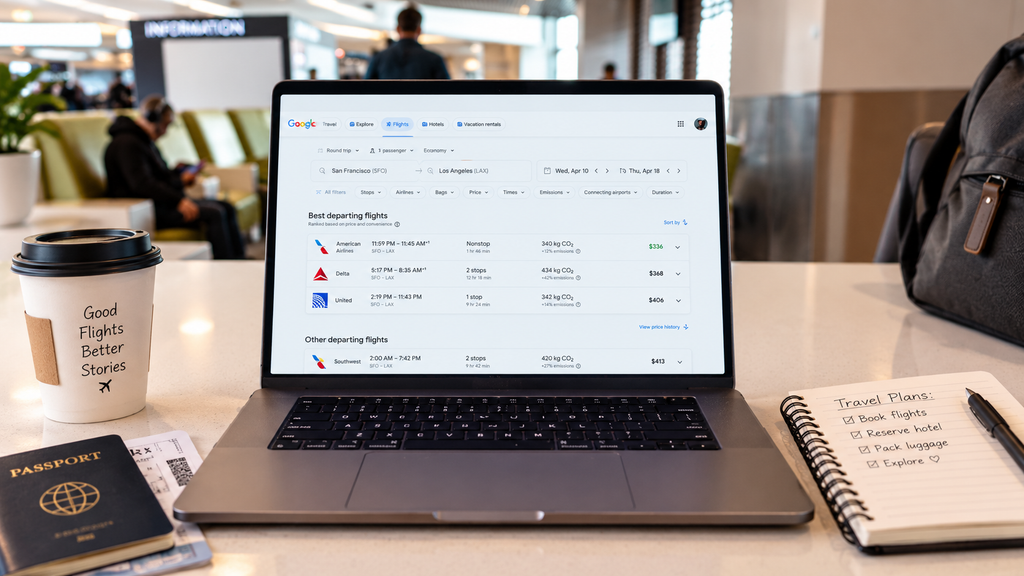
For some trips, booking a traditional round-trip ticket makes sense.
For others, separate one-way flights can give you more flexibility.
For example, you might find:
- Airline A for your outbound flight
- Airline B for your return flight
You can compare the combined price with a normal round-trip ticket.
However, there is an important point to remember: separate tickets can create additional complications if something goes wrong.
If one independently booked flight is delayed and causes you to miss the next flight, the second airline may not be responsible for protecting your connection.
So compare separate tickets carefully and leave enough time between flights when necessary.
Saving money is useful, but a small saving isn’t always worth adding unnecessary risk or stress.
Consider Connecting Flights Carefully

Direct flights are usually convenient, but connecting flights can sometimes cost less.
If you’re trying to reduce the airfare, compare both.
A connecting flight might save money, but ask yourself whether the saving is worth the additional travel time.
For example, saving $25 might not feel worthwhile if it adds eight hours to your journey.
On a long international trip, however, a significant fare difference may make a connection reasonable.
Look at the complete journey:
Price + travel time + connection length + airport changes + baggage rules.
That gives you a much clearer picture.
Don’t Ignore the Departure Time
Flight times can influence both price and convenience.
Very early morning or late-night flights may sometimes be cheaper, but they can create additional expenses.
If your flight leaves at 5:00 a.m., for example, you might need:
- An airport hotel
- A taxi
- Private transportation
- An earlier departure from home
That extra cost can reduce your actual savings.
On the other hand, if you already have convenient transportation and don’t mind the schedule, an unusual departure time can sometimes work in your favor.
Always compare the fare with the practical cost of making the flight.
Check the Airline Directly Before Booking

Flight search websites are excellent for comparing options, but don’t stop there.
Once you find a flight you like, check the airline’s own website.
Sometimes the airline may offer the same flight at a similar or different price, and booking directly can make managing your reservation easier.
Check:
- Final ticket price
- Baggage allowance
- Fare conditions
- Change policies
- Cancellation rules
- Seat options
This final comparison only takes a few minutes and can help you make a more informed decision.
Don’t Spend Hours Chasing a Perfect Price
This is probably the most important lesson.
There may always be another price.
You could spend another three hours searching and eventually find a ticket that is $10 cheaper. But if you have already found a fare that fits your budget and schedule, continuing to search may not be worth your time.
Cheap flights aren’t always about finding the absolute lowest possible price.
They’re about finding a good combination of price, timing, airline, baggage, and convenience.
Once you’ve found an option that checks those boxes, be comfortable making a decision.
Search During a Short, Focused Session

You don’t need to spend your entire evening searching for flights.
Try using a simple 15-minute process.
Minute 1–3: Define Your Trip
Write down:
- Departure city
- Destination
- Approximate travel dates
- Number of travelers
- Baggage requirements
- Whether you need a direct flight
This prevents you from randomly searching routes that don’t actually work.
Minute 4–7: Compare Dates
Check a few days before and after your preferred dates.
Look for noticeable differences rather than obsessing over every small price change.
Minute 8–10: Compare Airports and Airlines
Check nearby airports if practical.
Compare direct flights with reasonable connecting options.
Minute 11–13: Check the Total Cost
Look at baggage, seat fees, transportation, and other important costs.
Minute 14–15: Check the Airline
If you’ve found a promising option, check the airline directly and review the fare conditions.
Then make your decision.
This simple routine can turn flight searching from an endless activity into a quick travel-planning task.
Be Careful With Very Cheap Flights
A surprisingly low fare can be exciting, but take a moment before clicking the payment button.
Check the details carefully.
Ask:
What exactly am I getting for this price?
A basic fare might have restrictions that don’t suit your trip.
Check the baggage allowance, ticket flexibility, connection details, airport location, and any additional charges.
This is especially important when traveling internationally.
A cheap ticket isn’t useful if the restrictions make the trip uncomfortable or much more expensive than expected.
Think About the Whole Trip, Not Just the Flight
Your flight is only one part of your travel budget.
Sometimes spending slightly more on the flight can save money elsewhere.
For example, a flight arriving in the afternoon might allow you to use public transportation easily and check into your accommodation at a normal time.
A cheaper flight arriving at midnight might require an expensive airport transfer or an extra night at a hotel.
When comparing flights, consider the entire trip.
Think about:
Flight + transportation + accommodation + baggage + time.
This broader view can help you make better travel decisions.
When Is the Right Time to Book?
There isn’t one universal booking day that guarantees the cheapest airfare for every route.
Flight prices can change based on demand, season, airline inventory, route, and many other factors.
Instead of waiting for a mythical “perfect day,” focus on planning ahead and monitoring prices when possible.
If your dates are fixed, especially during a busy travel period, waiting too long can reduce your available choices.
If your dates are flexible, you have more room to compare different options.
The key is to avoid making your entire strategy depend on one flight-price rule.
Don’t Let “Cheap” Become the Only Goal
Travel is supposed to be enjoyable.
If saving $30 means taking three exhausting connections, paying extra baggage fees, traveling to a distant airport, and losing an entire day, it may not be a meaningful saving.
Sometimes the better decision is paying a little more for a flight that saves time and reduces stress.
The cheapest flight and the best-value flight aren’t always the same thing.
Your own priorities should determine what makes sense.
A Simple Cheap Flight Checklist
Before booking, run through this quick checklist:
- Did I check flexible dates?
- Did I compare nearby airports?
- Did I compare direct and connecting flights?
- Did I check the baggage allowance?
- Did I calculate the total cost?
- Did I check the airline’s website?
- Did I review the connection times?
- Did I check the arrival and departure times?
- Did I look at the fare rules?
- Does this flight actually fit my travel plans?
If you can answer yes to these questions, you have probably done enough research.
You don’t need to keep searching forever.
Final Thoughts

Finding cheap flights doesn’t have to mean spending hours staring at flight prices.
The trick is to build a simple search routine and know what actually matters.
Start with flexible dates when possible. Compare nearby airports. Use price alerts instead of constantly checking manually. Look at the total cost rather than the advertised fare. Compare the airline directly before booking, and don’t forget that your time and convenience have value too.
Most importantly, don’t become obsessed with finding the absolute cheapest ticket.
A good flight is one that fits your budget, schedule, luggage needs, and travel plans.
Once you find that balance, book it and move on to the more exciting part of the trip—planning where you’re going, what you’re going to see, and the memories you’re going to bring home.
Frequently Asked Questions
What is the easiest way to find cheap flights?
Start by comparing flexible dates, nearby airports, airlines, and direct versus connecting flights. Using price alerts can also reduce the need to repeatedly check fares manually.
Are flights cheaper on certain days?
Flight prices vary by route, season, demand, and other factors. There isn’t one day that consistently guarantees the cheapest fare for every flight.
Should I book a one-way flight or a round trip?
Compare both options. A round trip can be convenient, while separate one-way tickets may sometimes provide more flexibility. Always consider baggage, schedules, and the risks of booking separate tickets.
Are connecting flights cheaper than direct flights?
They can be, but not always. Compare the fare difference with the additional travel time and possible costs associated with the connection.
Should I check the airline website before booking?
Yes. After finding a suitable flight through a comparison service, check the airline’s website for the final price, baggage rules, fare conditions, and booking details.
How can I avoid spending hours searching for flights?
Use a focused search process. Check your dates, compare a few nearby airports and flight options, review the total cost, and set price alerts when possible. Once you find a suitable fare, avoid endlessly chasing a slightly lower price.
Is the cheapest flight always the best option?
No. A cheaper ticket may have additional baggage fees, inconvenient flight times, long connections, or other restrictions. The best-value option depends on your overall trip needs.
What should I check before buying a cheap flight?
Check the final price, baggage allowance, departure and arrival times, connection length, airport locations, change or cancellation rules, and any additional fees.