Why Meghalaya Feels So Different
There are places you visit for the photographs, and then there are places that make you forget to take the photograph.
Meghalaya is very much the second kind.
In India’s northeast, the landscape seems to change with every turn of the road. Green hills disappear into clouds, streams run beneath forest canopies, waterfalls suddenly appear between bends, and villages sit quietly among an extraordinary amount of greenery.
Then there is the rain.
In Meghalaya, rain isn’t simply something that arrives for a few hours and leaves. It has shaped the landscape, the forests, the rivers and even the way people live. After a shower, the hills become deeper green, waterfalls grow louder and the whole countryside seems freshly washed.
For nature lovers, this is what makes Meghalaya different. Vagamon Travel Guide: A Peaceful Escape Into Kerala’s Hills
You don’t come here simply to move from one attraction to another. The road itself becomes part of the experience.
From Shillong’s pine-covered hills to the waterfalls of Sohra, from the living root bridges hidden in the forests to the clear waters of the Umngot River, Meghalaya offers a journey through some of India’s most remarkable natural landscapes.
If you’re planning your first trip, these are some of the best places to visit in Meghalaya for nature lovers—and how to experience them without turning the journey into a rushed checklist.
Shillong: Where the Meghalaya Journey Begins
Most Meghalaya journeys begin in Shillong.
The state capital is busier than many of the places you’ll visit later, but it still carries the character of the hills. Pine trees, winding roads, viewpoints and pockets of greenery surround the city.
Shillong works well as your first base because it gives you time to settle into the landscape before heading farther into Meghalaya.
Ward’s Lake is an easy place to start, while Shillong Peak offers wider views when the weather cooperates. The city also has cafés, markets and restaurants where you can experience a little of everyday life before heading into more remote areas.
But don’t make the mistake of thinking Shillong is the whole Meghalaya experience.
It is the doorway.
Once you leave the city, the landscape begins to change quickly.
When Shillong Gets Quiet
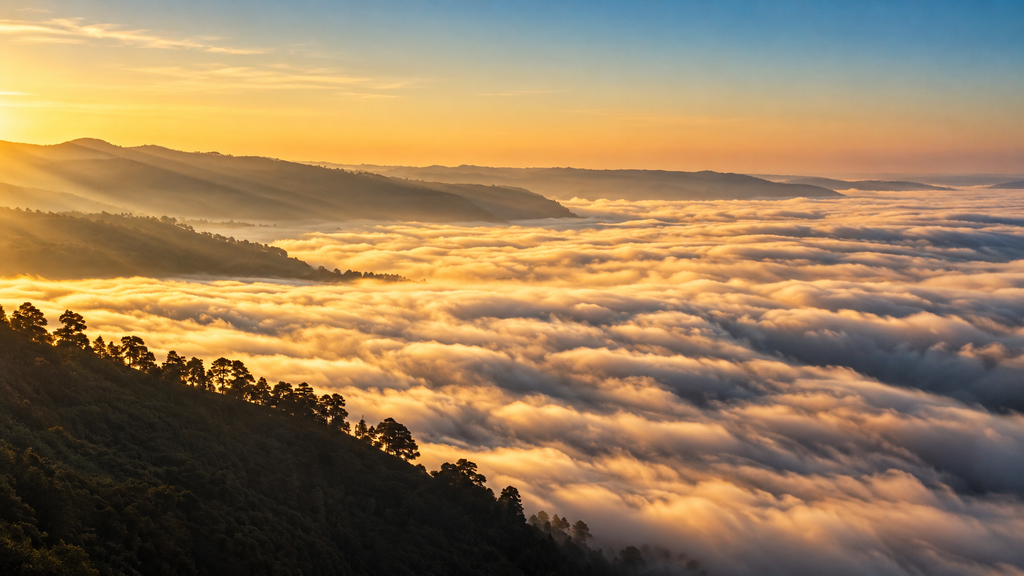
Early morning is one of the nicest times to explore Shillong.
The traffic is lighter, the air feels cooler and the hills around the city have a calmer character. Instead of trying to see everything in a few hours, give yourself time to simply drive, stop and look around.
That’s a good habit to carry throughout Meghalaya.
The state rewards travelers who leave some space in their itinerary.
Sohra: Where Waterfalls Take Over the Landscape
Leave Shillong behind and the road toward Sohra, better known as Cherrapunji, takes you into one of Meghalaya’s most dramatic landscapes.
This is waterfall country.
Deep valleys, cliffs, forests and streams create a landscape that feels almost built for rain. During wetter periods, water seems to appear everywhere.
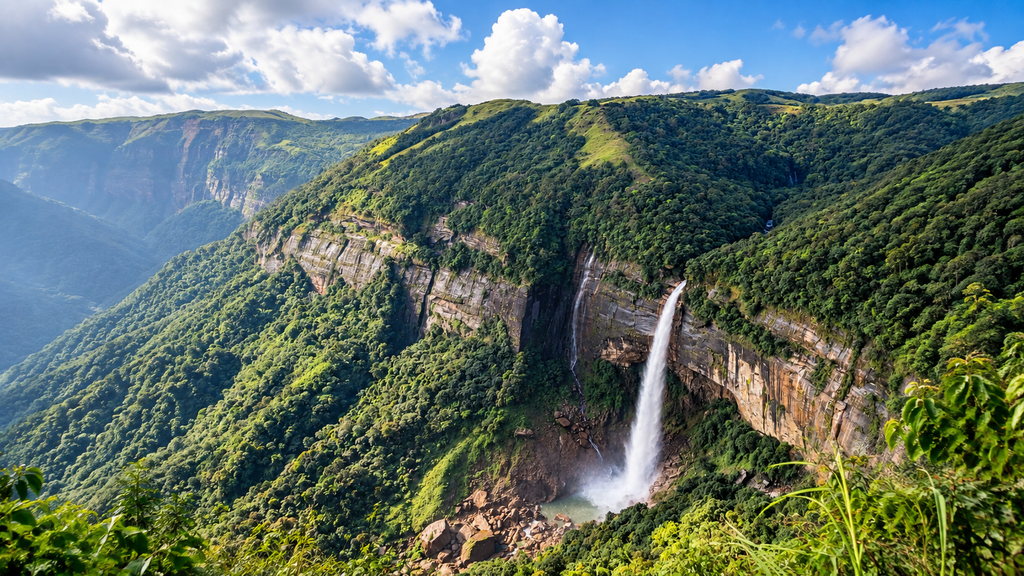
Nohkalikai Falls is the most famous sight in the area. Munnar Travel Guide: Ultimate Places, Routes & Amazing Tips
The waterfall drops dramatically from the surrounding plateau into a deep pool below. From the viewpoint, the scale of the landscape is difficult to appreciate in a single photograph.
But Sohra isn’t only about one famous waterfall.
The surrounding region contains numerous viewpoints, caves, smaller waterfalls and forest trails. Some places are easy to reach, while others require more time and walking.
That difference is important when planning your day.
Don’t Try to See Everything in One Morning
The attractions around Sohra may look close together on a map, but mountain roads aren’t the same as city roads.
Allow time for driving, weather, viewpoints and unexpected stops.
You may see a road disappearing into mist and want to stop.
You may find a small waterfall beside the road.
You may simply want to sit somewhere and watch the clouds move through the valley.
Don’t plan such a tight itinerary that you have to say no to those moments.
The Living Root Bridges: Where Nature Becomes a Road
Some of Meghalaya’s most remarkable structures aren’t made from concrete or steel.
They’re grown.
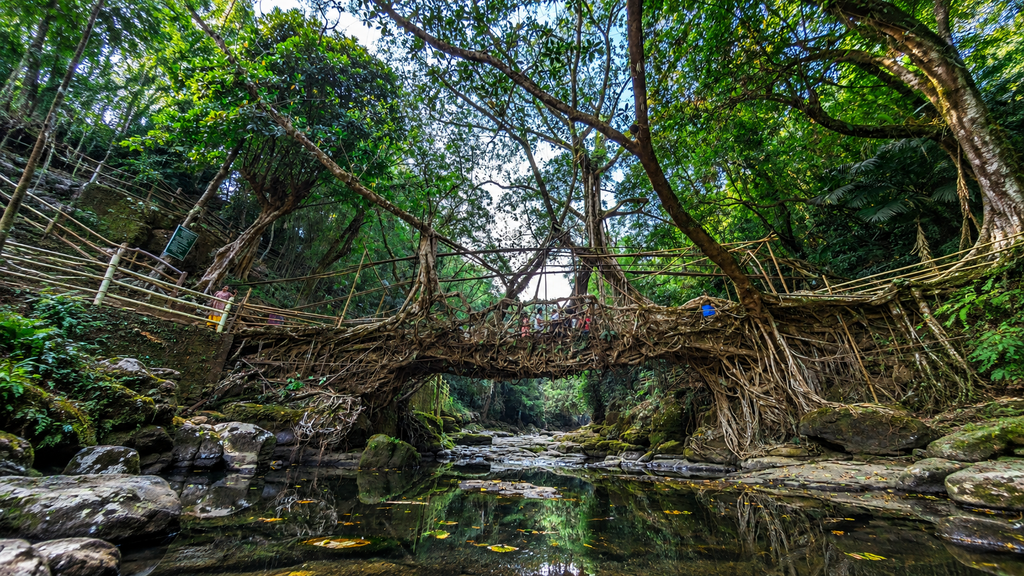
Across parts of the Khasi and Jaintia hills, local communities have traditionally guided the roots of rubber fig trees across streams and gaps, gradually creating bridges strong enough for people to cross.
These living root bridges can take years to develop.
And unlike an ordinary bridge, they continue growing.
The Double Decker Living Root Bridge near Nongriat is one of the most famous examples. Getting there isn’t easy, though, and that is part of what makes the experience memorable.
The journey involves a long series of steps through a humid tropical landscape.
By the time you reach the bridge, you’ve earned the view.
The Hike to Nongriat
If you’re planning this trek, start early and carry enough water.
Good walking shoes are important, particularly when the trail is wet. Take your time on the steps rather than treating the hike like a race.
The return journey can be more tiring than expected.
This is also a place where responsible tourism matters. Don’t damage plants, leave rubbish behind or treat the bridge as a playground.
You’re visiting something that has been shaped by both nature and generations of local knowledge.
Mawlynnong: A Quiet Village in the Hills
Mawlynnong became internationally known for its cleanliness, but the village offers more than a reputation.
Its surroundings are the real attraction.
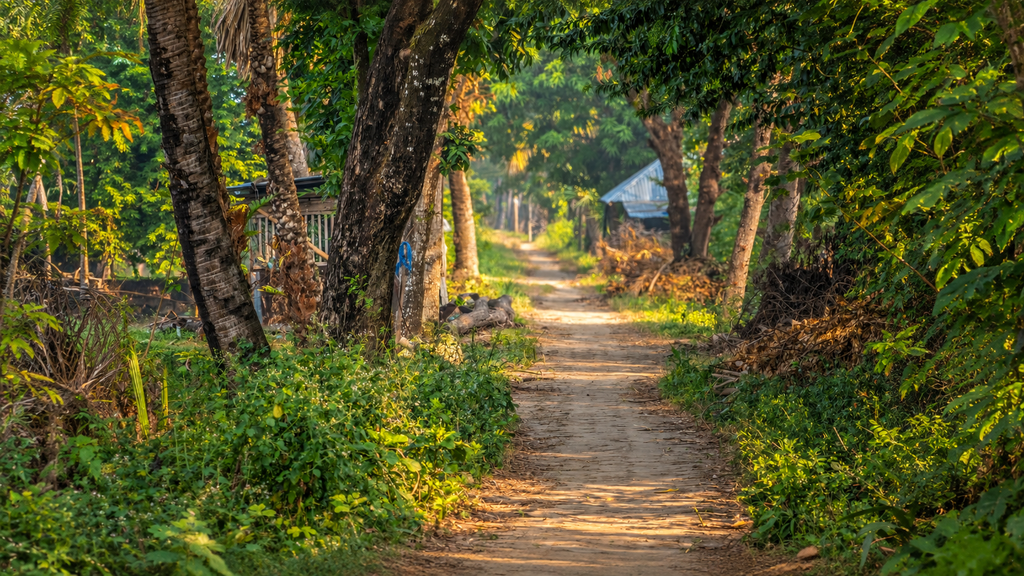
Green hills, narrow pathways, traditional homes, gardens and distant views toward the Bangladesh plains create a peaceful atmosphere that feels very different from Shillong.
Mawlynnong is best experienced slowly.
Walk rather than simply arriving for a photograph. Notice the gardens and small details around the homes. Take time to understand that this is a living community, not a tourist attraction created for visitors.
Nearby sights can also be included in the same journey.
Travel Respectfully Through Villages
When visiting smaller communities, simple things matter.
Keep noise down. Avoid entering private spaces. Ask before taking close-up photographs of people and follow local instructions.
Tourism can bring important income to rural communities, but respectful behavior helps make that relationship sustainable.
Dawki and the Clear Waters of the Umngot River
Then comes Dawki.
The journey toward the border region introduces another side of Meghalaya. The hills open up, the landscape becomes wider and the Umngot River becomes the main attraction.
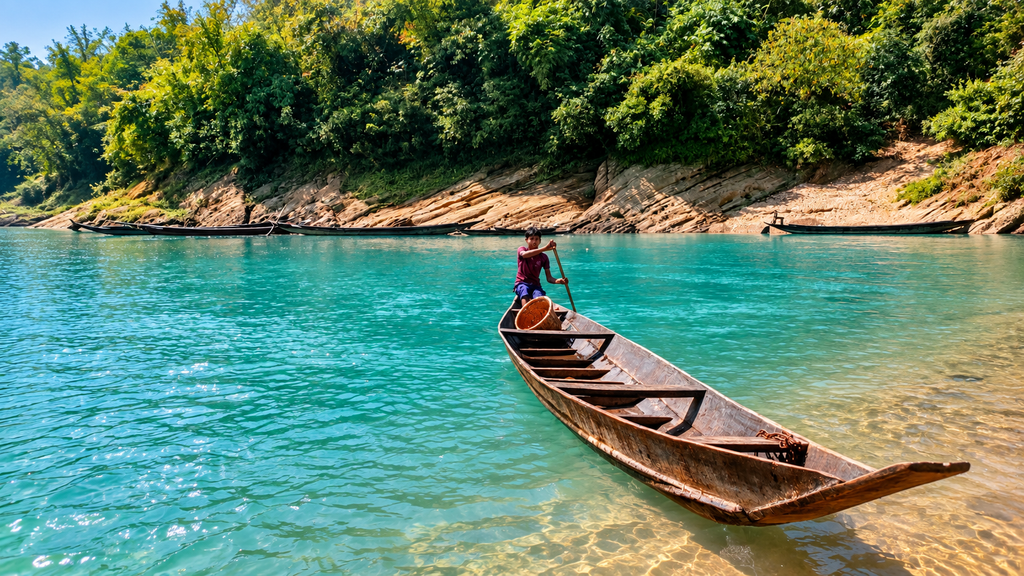
The river is famous for its remarkably clear water under suitable conditions.
On a calm day, boats seem to float above the riverbed.
It’s one of those scenes that can look almost too perfect in photographs.
But remember that river conditions change.
Rainfall, sediment and weather can affect water clarity, so don’t expect the river to look exactly like every photograph you have seen online.
That doesn’t make Dawki less beautiful.
The surrounding hills and river landscape are still worth experiencing.
Experience the River, Don’t Just Photograph It
If boating is operating and conditions are safe, getting onto the river gives you a completely different perspective.
From the water, the surrounding landscape opens up.
The boat moves slowly, the hills rise on either side and the noise of the road feels far away.
It’s one of the moments in Meghalaya when doing less actually gives you more.
Krang Suri Falls: A Different Shade of Meghalaya
If waterfalls are high on your Meghalaya list, make room for Krang Suri.
Located in the Jaintia Hills, the waterfall is known for its striking blue-green pool surrounded by thick greenery.
The setting feels almost hidden.
Unlike a huge waterfall viewed from a distant platform, Krang Suri brings you closer to the water and forest.
The color of the pool can be especially striking under good weather conditions.
But the real attraction is the combination of water, rock and forest.
Beautiful Water Doesn’t Always Mean Safe Water
Always pay attention to local instructions around waterfalls and pools.
Water levels and currents can change quickly, particularly during rainy weather.
If swimming is permitted, follow safety guidance and avoid entering the water during dangerous conditions.
The landscape may look peaceful, but natural water is never completely predictable.
Mawphlang Sacred Forest: A Forest With a Story
Mawphlang Sacred Forest offers a completely different kind of nature experience.
This isn’t simply a collection of trees.
The forest has cultural and spiritual significance for the Khasi community, and that makes the experience more meaningful than an ordinary nature walk.
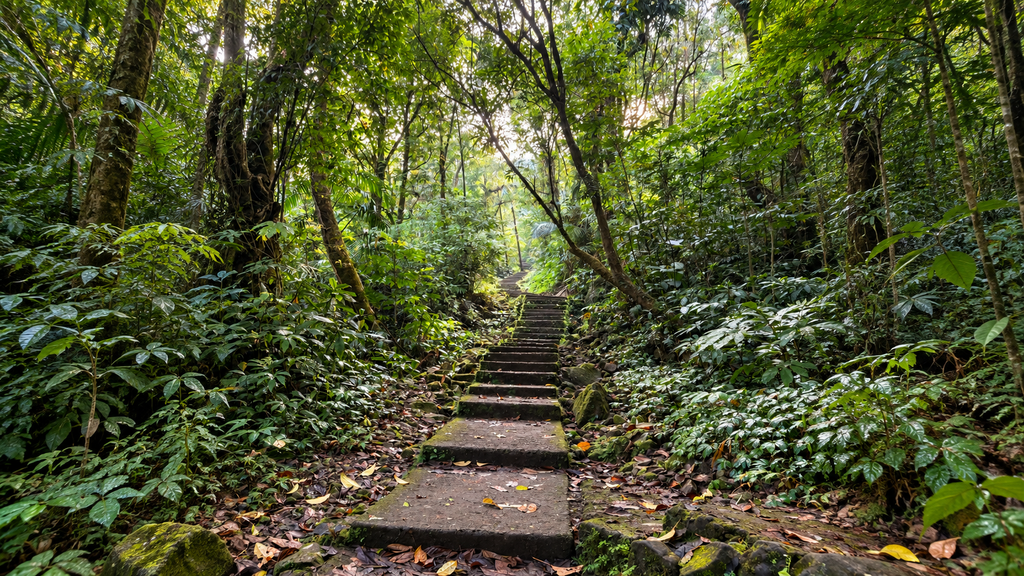
Inside, the atmosphere becomes noticeably quieter.
Trees rise around narrow paths, moss covers parts of the landscape and smaller plants fill spaces between larger trunks.
The forest feels old.
And while photographs can capture the greenery, they don’t capture the atmosphere very well.
Walk Slowly and Leave Nothing Behind
This is a place where respectful travel is especially important.
Follow local rules and avoid taking plants, stones or other natural objects from the forest.
If you have the opportunity to explore with a local guide, take it. Understanding why the forest is important adds another layer to the experience.
Laitlum Canyon: A View Worth Sitting For
Some destinations don’t need many attractions.
Laitlum Canyon is one of them.
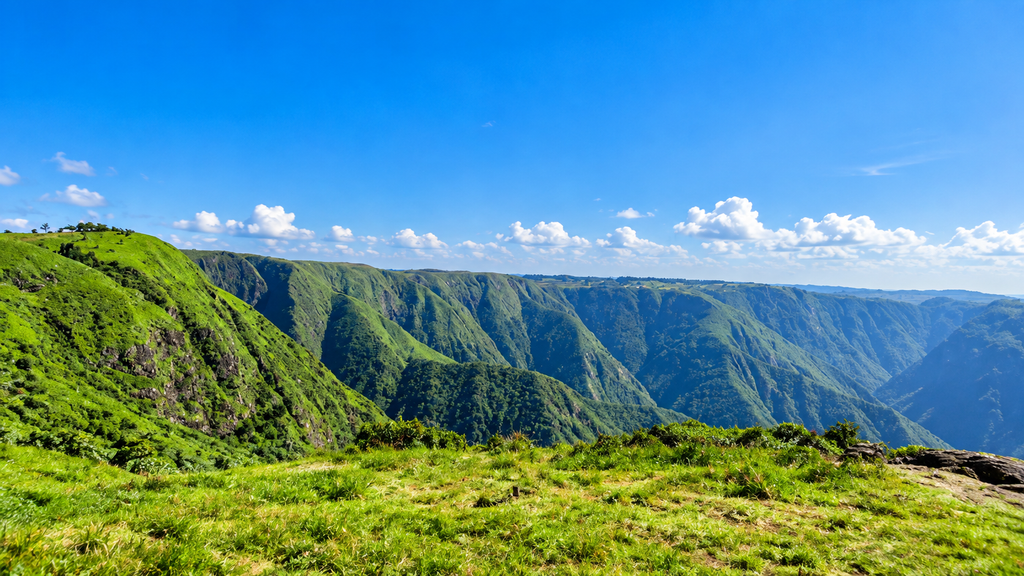
The landscape opens into a vast green valley, with hills and small settlements spreading across the distance.
Clouds move quickly through the area, sometimes covering the valley in mist before revealing the landscape again.
That changing view is part of the attraction.
Instead of arriving, taking three photographs and leaving, find a quiet place and sit for a while.
Watch the clouds.
Listen to the wind.
Look at how small the villages appear below.
Let the Weather Decide the View
Mountain weather can change quickly.
A clear morning can become cloudy, and a cloudy period can suddenly open into a spectacular view.
If the weather isn’t perfect when you arrive, don’t immediately assume you’ve missed the experience.
Give it some time.
Sometimes Meghalaya reveals itself slowly.
Meghalaya Nature Road Trip Route
If you’re visiting Meghalaya mainly for landscapes, waterfalls, forests and scenic roads, a route connecting the major nature destinations can make the trip easier.
A practical first-time route can begin in Shillong, continue toward Sohra, then move toward Mawlynnong and Dawki, before exploring the Jaintia Hills and returning toward Shillong.
You can adjust the route depending on how many days you have and which hikes or remote areas you want to include.
Suggested Route
Shillong → Sohra → Nongriat → Mawlynnong → Dawki → Krang Suri → Shillong
Don’t treat this as a strict timetable.
The distances, road conditions and weather can affect how long each journey takes. Leave enough flexibility for stops and changing conditions.
Meghalaya Nature Road Trip
One scenic journey through Meghalaya’s waterfalls, forests, villages, rivers and mountain roads.
Shillong
Begin your Meghalaya journey among pine-covered hills before heading deeper into the countryside.
Sohra
Follow the mountain roads toward dramatic cliffs, valleys and the waterfalls of Sohra.
Nongriat
Head into the forest toward one of Meghalaya’s most remarkable living root bridge experiences.
Mawlynnong
Continue through Meghalaya’s green hills toward the peaceful village landscape of Mawlynnong.
Dawki
Follow the road toward the border hills and the clear waters of the Umngot River.
Krang Suri Falls
Continue into the Jaintia Hills toward the forested landscape of Krang Suri Falls.
Return to Shillong
Complete the loop through Meghalaya’s changing mountain landscapes and return to Shillong.
Mountain roads and weather can change journey times. Use this route as a flexible guide rather than a strict timetable.
Mawsynram: Where Rain Shapes the Landscape
Mawsynram is famous for its extraordinary rainfall, but visiting the region is about more than saying you’ve been to one of the world’s wettest places.
Rain has shaped everything here.
The vegetation is lush, streams appear throughout the landscape and roads can feel completely different depending on the weather.
For photographers and nature lovers, this makes Mawsynram particularly interesting.
But come prepared.
During wet periods, journeys can take longer and outdoor plans may need to change.
That isn’t necessarily a disadvantage.
In Meghalaya, the weather is part of the landscape.
Umiam Lake and the Scenic Roads Around Shillong
Not every memorable Meghalaya stop has to be a famous attraction.
Umiam Lake, north of Shillong, is an excellent example.
The large reservoir is surrounded by hills and provides a wide, open landscape after the narrower roads and valleys around other parts of the state.
It’s also a natural stop when travelling between Shillong and other parts of Meghalaya.
For road-trip travelers, these quieter places matter.
They break up long drives and give you time to simply enjoy the scenery without constantly looking for the next attraction.
Sometimes the unexpected roadside stop becomes one of the memories you take home.
When Is the Best Time to Visit Meghalaya?
There isn’t one perfect season for everyone.
The best time depends on what you want from the trip.
The wetter months bring dramatic waterfalls, intense greenery and the unmistakable atmosphere Meghalaya is known for. However, heavy rainfall can also make roads and hiking trails more difficult.
The drier months generally offer easier conditions for sightseeing and road travel.
Winter can be pleasant for travelers who prefer cooler weather and clearer days.
If waterfalls are your main priority, wetter conditions can be rewarding. If long road journeys and hiking comfort matter more, a drier period may suit you better.
The smartest approach is to choose the season based on your travel priorities rather than blindly following a generic recommendation.
How to Plan a Meghalaya Nature Trip
Meghalaya becomes much more enjoyable when you stop trying to see everything.
For a first trip, give yourself enough time for Shillong, Sohra and at least one of the eastern or southern areas.
If you’re interested in the living root bridges, allow time for the hike instead of squeezing it between several other attractions.
The same applies to Dawki.
Don’t spend most of the day driving just to stay for twenty minutes.
Give the Roads More Time Than You Think
Mountain distances can be deceptive.
A short distance on the map can take considerably longer because of winding roads, traffic, weather and stops.
Keep your daily itinerary realistic.
You’ll enjoy the trip much more if you have time to stop when the landscape catches your attention.
Pack for Changing Weather
A lightweight rain jacket is one of the most useful things to carry.
Add comfortable walking shoes, a small daypack, drinking water, personal medicines and some cash for places where digital payments may not be available.
For longer hikes, avoid carrying unnecessary luggage.
Travel light and keep the things you need close.
Food to Try While Exploring Meghalaya
Nature may bring you to Meghalaya, but local food can become another memorable part of the journey.
Khasi and Jaintia cuisine has its own character, with rice, pork, vegetables and fermented or smoked ingredients appearing in many traditional preparations.
Jadoh is one of the dishes travelers may encounter, while local eateries offer plenty of opportunities to try regional food beyond familiar restaurant menus.
You don’t need to turn every meal into a food adventure.
Just try something local when you have the opportunity.
Ask what a dish contains if you’re unsure, especially if you’re unfamiliar with fermented or smoked ingredients.
Supporting local restaurants and small food businesses is also a simple way to let your travel spending reach the communities you visit.
Responsible Travel in Meghalaya
The beauty of Meghalaya comes with a responsibility.
Many of the places visitors come to see are fragile environments.
That includes forests, rivers, waterfalls, villages and living root bridges.
Don’t leave plastic behind.
Don’t carve names into trees or rocks.
Don’t disturb wildlife.
Don’t take natural objects from protected or culturally significant areas.
Follow local instructions around waterfalls and trails.
And remember that a photograph isn’t worth damaging the place you’re photographing.
The goal should be simple: leave the destination looking as good as—or better than—you found it.
Frequently Asked Questions About Meghalaya
What are the best places to visit in Meghalaya for nature lovers?
Some of the strongest choices include Shillong, Sohra, Nohkalikai Falls, Nongriat’s living root bridges, Mawlynnong, Dawki, Krang Suri Falls, Mawphlang Sacred Forest, Laitlum Canyon, Mawsynram and Umiam Lake.
How many days are enough for Meghalaya?
Around 6–8 days can provide a good introduction to the major destinations. If you want to include longer hikes, quieter villages and the Jaintia Hills at a slower pace, adding more days is worthwhile.
Is Meghalaya good for a road trip?
Yes. Road travel is one of the best ways to experience Meghalaya because the landscape changes continuously. However, mountain roads and weather can make journeys slower than expected.
Is Meghalaya suitable for first-time travelers?
Yes. The main tourist areas are accessible to first-time visitors, although hikes and remote destinations require more preparation.
Can Meghalaya be visited during the monsoon?
Yes, but travelers should expect heavy rain and potentially changing road and trail conditions. Waterfalls and greenery can be especially impressive during wetter periods.
Which place in Meghalaya is best for waterfalls?
Sohra is one of the best areas for waterfall lovers because of its dramatic cliffs, waterfalls and viewpoints. Krang Suri is another excellent choice.
What should I pack for a Meghalaya trip?
Carry comfortable walking shoes, a rain jacket, lightweight clothes, a small backpack, drinking water, personal medicines and some cash. If you’re hiking, proper footwear is particularly important.
Final Thoughts: Let Meghalaya Slow You Down
Meghalaya isn’t really a destination that rewards rushing.
It asks you to slow down.
To notice the clouds moving over the hills.
To listen for a waterfall before you can see it.
To walk through a forest without constantly checking the time.
To cross a bridge that is still alive and growing.
To sit beside a river and watch a boat move through clear water.
The famous places are worth seeing, but they aren’t the entire story.
The road between them matters too.
A quiet village. A misty bend. A roadside viewpoint. A sudden break in the clouds.
These are the moments that turn a collection of tourist attractions into a journey.
And that’s why Meghalaya can stay with you long after you’ve left.
You may arrive looking for waterfalls and mountains.
You may leave remembering the road.