There Is Another Oman Waiting Beyond the Famous Places
There is an Oman that everybody knows.
It is the Oman of Muscat’s coastline, Mutrah Souq, the Sultan Qaboos Grand Mosque, Nizwa, Wadi Shab and the golden dunes of Sharqiya Sands.
Those places deserve their reputation. But if you spend enough time travelling through Oman, you start noticing something else.
The country keeps changing.
Leave the busy roads behind and the landscape begins to open up. Mountains rise in front of you. Small villages appear between rocky slopes. Date palms suddenly bring a splash of green to an otherwise dry valley. The coastline becomes quieter. A road that looked ordinary on the map becomes one of the most memorable parts of the journey.
That is the Oman I want to explore here.
Not necessarily the places nobody has ever heard of. Some of these destinations are known to local travelers and increasingly appear on travel itineraries. But compared with the country’s biggest attractions, they can still give you that wonderful feeling of being away from the usual tourist path.
And honestly, that feeling is often what I look for when I travel.
I don’t always want another famous viewpoint.
Sometimes I want a road with no traffic.
Sometimes I want to sit beside the sea and have nowhere else to be.
Sometimes I want to walk through a village, hear water moving through an old irrigation channel and wonder how many generations have walked the same path. Best Places to Visit in Oman: 10 Amazing Destinations
Oman’s official tourism platform highlights an extraordinary range of landscapes, including mountain villages such as Wakan and Balad Sayt, the Daymaniyat Islands, Bar Al Hikman and Sharqiya Sands.
So if you’re searching for hidden gems in Oman, don’t just search for secret locations.
Search for experiences.
Search for roads.
Search for quiet.
And leave a little room for the country to surprise you.
Why Explore the Hidden Gems in Oman?
One of the best things about travelling beyond the obvious route is that you stop treating the country like a checklist.
You don’t have to wake up thinking about how many attractions you can squeeze into one day.
You can drive.
Stop.
Look around.
Continue.
Maybe you find a small roadside restaurant.
Maybe you see a mountain village you didn’t expect.
Maybe the sunset is so good that you forget about the next destination entirely.
Oman is particularly rewarding for this style of travel because its landscapes change dramatically. Mountains, wadis, desert and coastline can all become part of the same road trip.
The journey matters.
And that’s something I think we sometimes forget.
We spend so much time trying to reach the destination that we stop paying attention to everything between here and there.
In Oman, the “between” can be the best part.
Wakan Village — A Green Village High in the Mountains
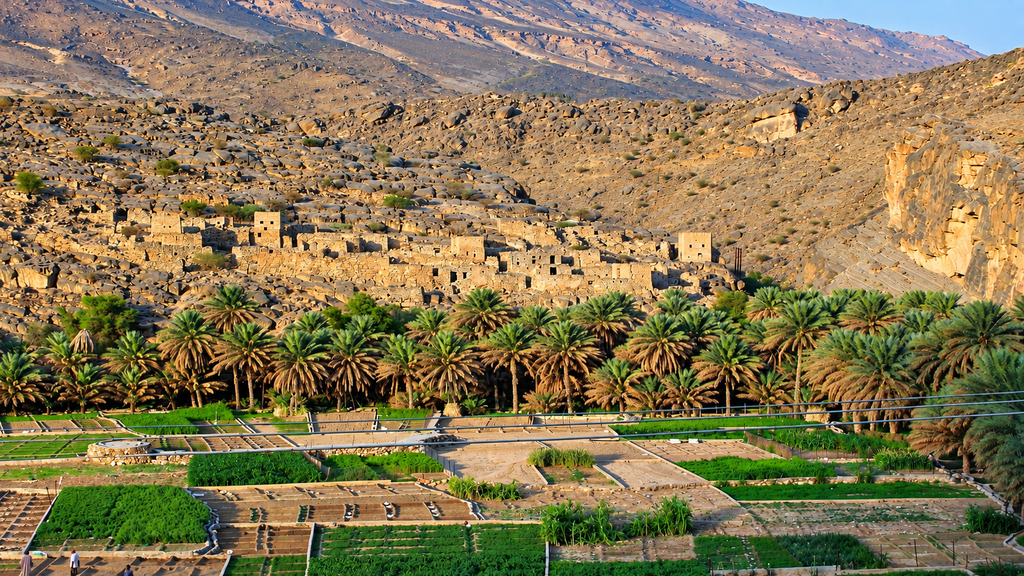
There are moments when Oman completely surprises you.
Wakan Village is one of them.
After travelling through dry mountain scenery, you suddenly see terraces of green climbing the slopes. Palm trees stand against the rocky mountains, and the village seems almost suspended above the landscape.
Wakan is in South Al Batinah and sits at an elevation of around 2,000 metres above sea level. Oman’s official tourism platform describes it as one of the country’s mountain villages and highlights its mountain trails and agricultural landscape.
You don’t have to arrive with a complicated hiking plan to appreciate it.
Walk.
Look around.
Take your time.
The terraces are part of what makes Wakan special. They show how agriculture has been adapted to an environment that initially looks too rugged for farming.
That contrast is beautiful.
Grey rock.
Green palms.
Blue sky.
Old pathways.
And mountains rising in every direction.
What Makes Wakan Worth Visiting?
The scenery is the obvious answer, but there is more to it.
Wakan gives you a glimpse of a mountain community rather than simply another viewpoint.
If you enjoy photography, early morning and late afternoon can be particularly rewarding because softer light brings out the texture of the mountains and terraces. Best Places to Visit in Oman: 7-Day Trip & Top Destinations
And don’t make the mistake of arriving, taking three photographs and leaving.
Walk a little.
Look at the details.
The best travel photographs are often not the obvious ones.
Mountain road route from Muscat toward Wakan Village in South Al Batinah.
Muscat → Nakhal → Wakan Village
A scenic mountain route from Muscat toward Nakhal and Wakan Village. Every destination has its own Google Maps link below.
Begin the journey from Oman’s capital before heading toward the mountains.
Open Muscat in Google Maps → 02 NakhalA mountain destination surrounded by rugged landscapes and historic scenery.
Open Nakhal in Google Maps → 03 Wakan VillageA peaceful mountain village known for terraced gardens and dramatic views.
Open Wakan in Google Maps →Balad Sayt — A Village Hidden Inside the Mountains
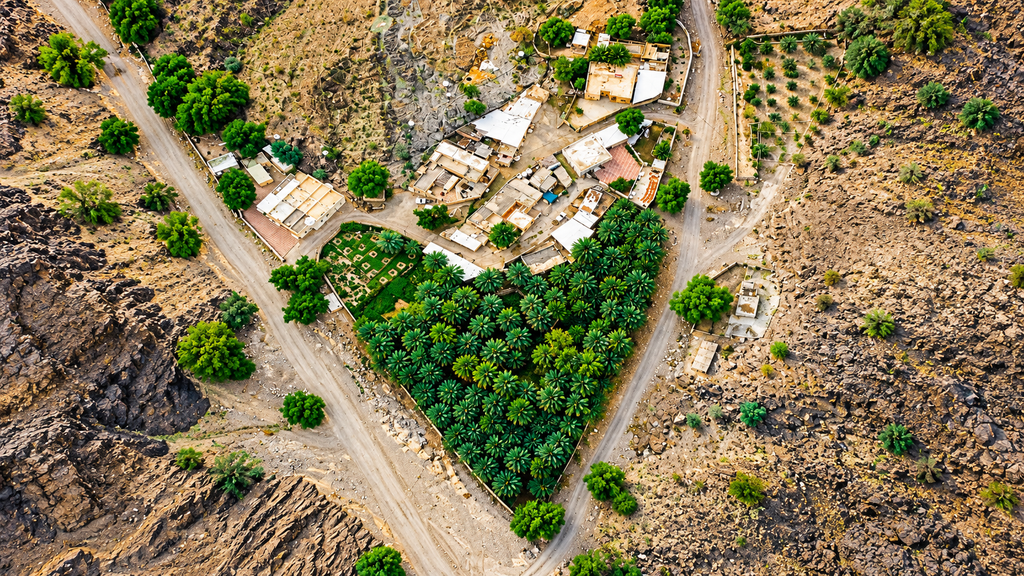
The mountains become the walls.
The road becomes narrower.
And then, almost unexpectedly, the village appears.
Balad Sayt is known for its agricultural terraces and traditional village setting. Oman’s official tourism information specifically states that visiting the village requires a four-wheel-drive vehicle and familiarity with mountainous terrain.
That detail should be taken seriously.
The journey is beautiful, but mountain roads aren’t the place to test your confidence. 15 Most Beautiful Beaches in the World
If you’re not experienced with mountain or off-road driving, consider going with someone who is.
Once you’re there, slow down.
The village has internal paths around many parts of the settlement, making walking a much better way to appreciate the place than simply arriving, taking a photograph and immediately turning around.
The Drive Is Part of the Adventure
One thing I would never recommend is rushing this kind of journey.
Leave enough time.
Check the weather.
Check the vehicle.
Make sure you have fuel and water.
Oman’s official travel guidance recommends checking tyres and fuel, taking extra care on mountain roads and being particularly cautious during rain and fog.
The goal isn’t simply to reach Balad Sayt.
The goal is to enjoy the journey safely.
Misfat Al Abriyeen — Where the Old Village Still Feels Alive
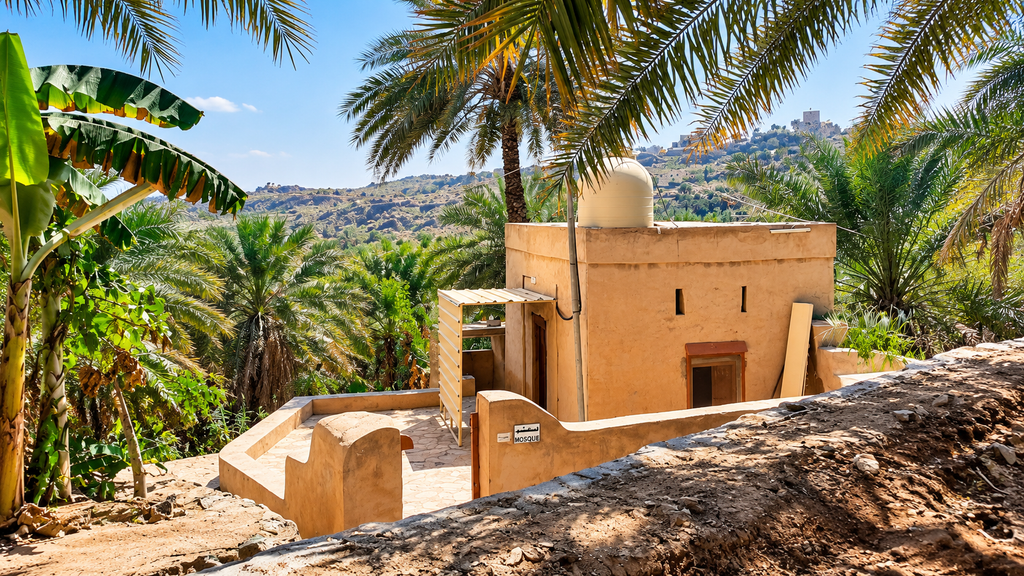
Some places look beautiful in a photograph.
Misfat Al Abriyeen feels better when you actually walk through it.
The old village sits among the Hajar Mountains, surrounded by date palms and agricultural terraces. Traditional homes, narrow pathways and the falaj irrigation system create a landscape that feels deeply connected to the generations who lived here before tourism arrived.
Oman’s tourism material describes the falaj as central to village life and highlights locally owned guesthouses as a way to experience the village more slowly.
That is what I like about Misfat.
It doesn’t feel like a place built just for visitors.
It feels lived in.
The water still matters.
The terraces still matter.
The pathways still matter.
And that’s why visitors need to be respectful.
Stay Overnight If You Can
A quick visit is enough to see the village.
But staying overnight gives you something different.
The afternoon crowds disappear.
The mountains become quieter.
The temperature drops.
And suddenly you have time to walk without constantly thinking about the next stop.
The locally owned guesthouses are part of that experience, with traditional settings and food helping visitors connect with the character of the village.
Sometimes the best way to experience a destination is simply to stop treating it like a stop. Stay.
Wadi Tiwi — A Valley Worth Exploring Slowly
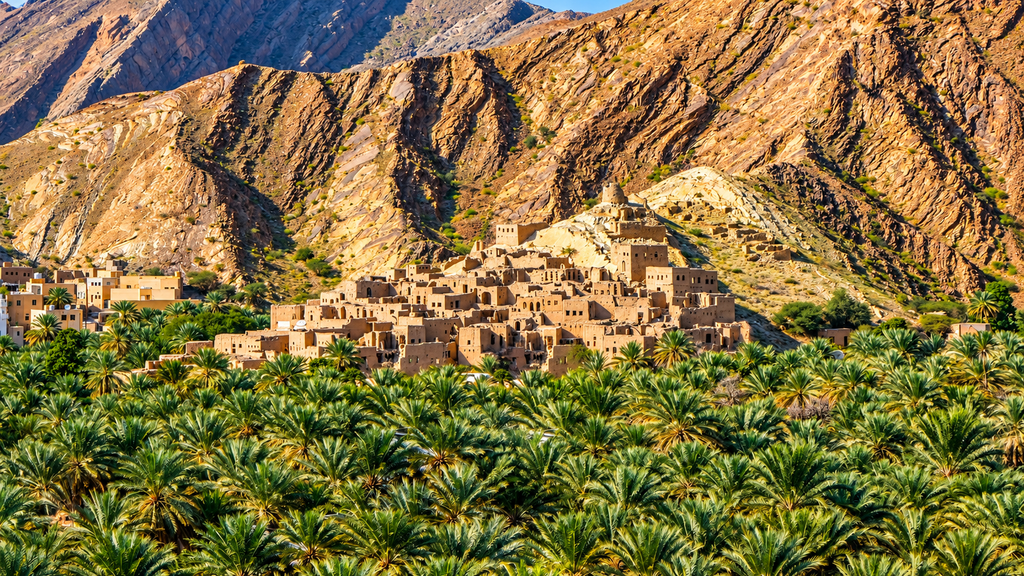
When people talk about Oman’s wadis, Wadi Shab usually gets most of the attention.
But Wadi Tiwi deserves time too.
Rather than thinking of it as one attraction, think of it as a valley.
There are villages.
Palm groves.
Mountain roads.
Agricultural terraces.
And dramatic cliffs surrounding everything.
The experience is less about arriving at one perfect viewpoint and more about following the valley and seeing how the landscape changes.
That makes it especially good for a road trip.
You can stop.
Take a photograph.
Walk for a while.
Continue.
Remember That These Are Real Communities
The villages around Oman’s wadis aren’t theme parks.
People live there.
Farms are working properties.
Water systems are important.
Oman’s visitor guidance asks travellers not to pick fruit or vegetables, not to pollute falaj systems and to respect private property and designated parking areas.
That is simple travel etiquette.
And it makes a difference.
When you travel through someone’s home, behave like a respectful guest.
Wadi Shab — Famous, But Still Worth the Journey
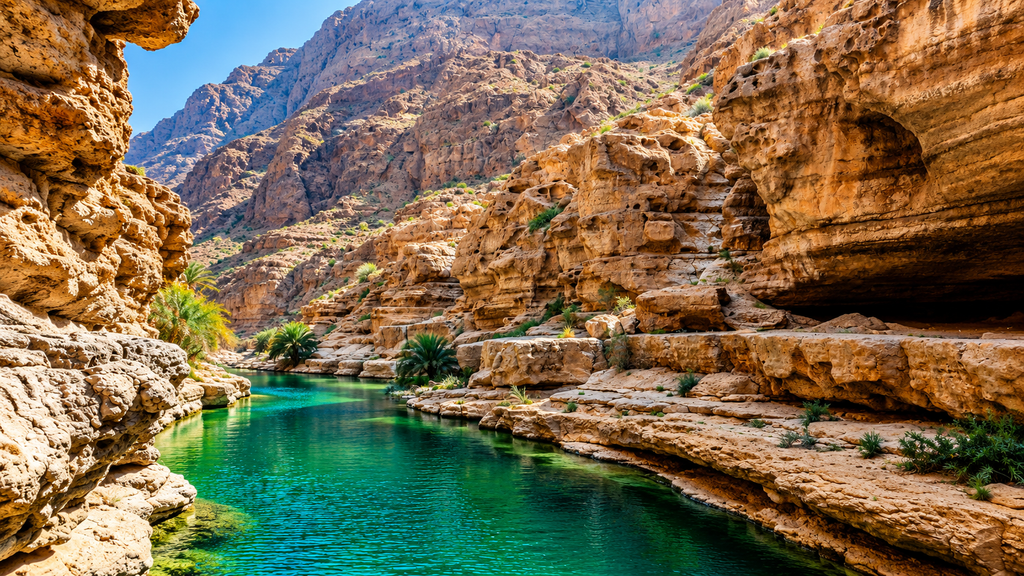
Yes, Wadi Shab is famous.
No, I wouldn’t leave it out.
There is a difference between a popular destination and a destination that has stopped being worth visiting.
Wadi Shab remains one of Oman’s most impressive outdoor experiences.
The official tourism site describes the route as beginning with a short boat crossing before a hike through the valley, with natural pools and an underground grotto with a waterfall forming part of the experience.
But you need to prepare.
This isn’t the place for flip-flops and one small bottle of water.
The official guidance recommends suitable footwear, sun protection, extra swimming gear and plenty of water because there are no shops inside the wadi. It also notes that basic swimming ability is necessary if you want to reach the hidden waterfall through the narrow cave.
Go Prepared, Not Just Excited
Bring water.
Bring food.
Wear proper shoes.
Protect yourself from the sun.
And check conditions before entering.
The scenery is beautiful, but nature doesn’t care whether you have a hotel reservation waiting for you later.
Al Ashkharah — Where the Coast Opens Up

There is a point on an Oman road trip where the mountains begin to give way to the sea.
The landscape opens.
The road feels longer.
And the horizon suddenly seems enormous.
Al Ashkharah is a place where that feeling becomes especially strong.
The official tourism platform describes its sandy beaches as extending for several kilometres along the Arabian Sea.
There isn’t a need to create a complicated itinerary here.
Walk along the coast.
Watch the fishing boats.
Find a quiet place.
Wait for sunset.
That simplicity is the attraction.
After spending days moving from one landmark to another, an empty stretch of coastline can feel like luxury.
Masirah Island — For Travellers Who Want More Space
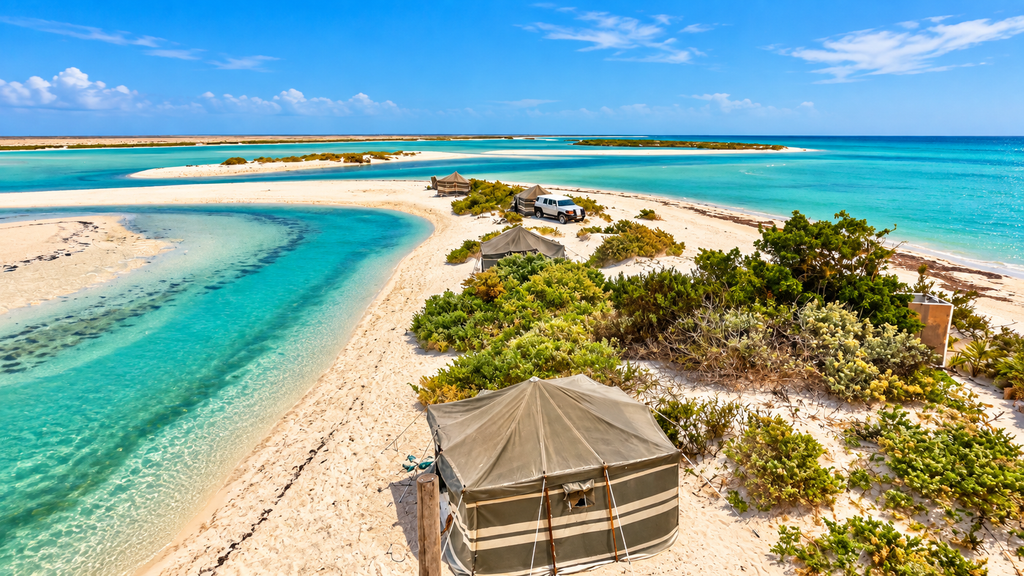
Masirah Island is the kind of destination you choose when you don’t mind going farther.
The island sits off Oman’s southeastern coast and is known for its beaches, marine environment and wildlife. Official tourism information highlights sea turtles and migratory birds among the island’s natural attractions.
What makes Masirah interesting isn’t just one attraction.
It’s the space.
The feeling of being somewhere separated from mainland life.
The long coastline.
The wind.
The sea.
The changing light.
Don’t Turn Masirah Into a Checklist
Masirah is better when you leave some time unplanned.
You don’t need to fill every hour.
Explore the coast.
Look for birds from a respectful distance.
Watch the sea.
Take photographs.
Talk to local people when the opportunity comes naturally.
And if you see turtles or other wildlife, keep your distance.
The best wildlife encounter is one where the animal doesn’t feel disturbed by your presence.
Bar Al Hikman — A Remote Coastline for Nature Lovers
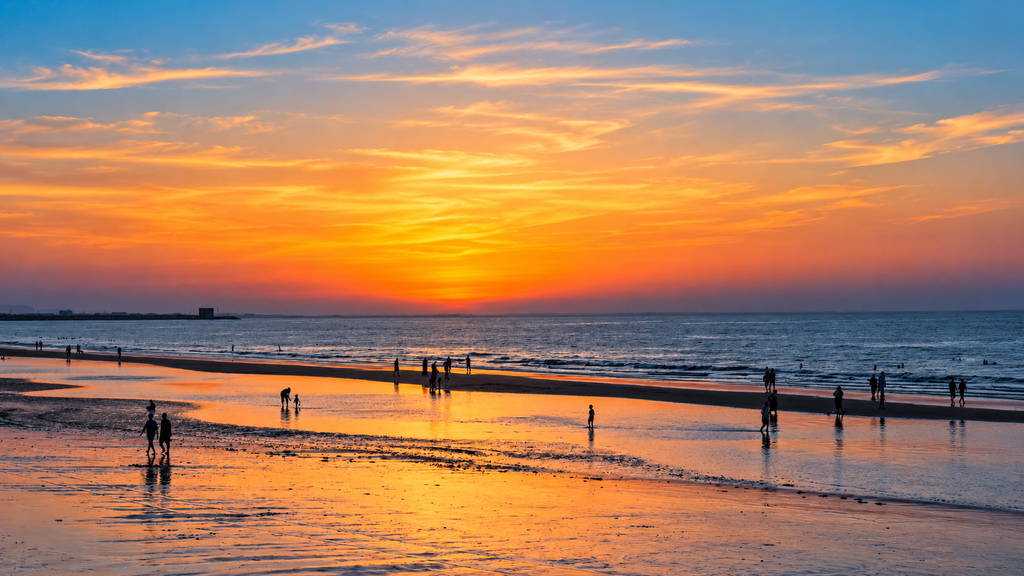
Some places don’t have a famous building.
They don’t have a crowded viewpoint.
They don’t even have a long list of things to do.
Bar Al Hikman is interesting because of the environment itself.
Oman’s tourism platform describes it as an important bird migration station and highlights its coastal and marine environment.
That makes it particularly attractive for people interested in nature and photography.
But remote travel comes with responsibility.
You need enough fuel.
Enough water.
Enough food.
Reliable navigation.
And a suitable vehicle.
Oman’s official safety guidance recommends 4WD vehicles for off-road travel, avoiding solo off-road journeys, carrying spare tyres and adequate food, water and fuel, and telling someone about your plans.
The farther you go from towns, the less room there is for careless planning.
Go for the Landscape
Don’t expect a conventional tourist attraction.
Go because you want to experience a huge, quiet coastal environment.
Sometimes that’s enough.
Daymaniyat Islands — A Hidden World Beneath the Surface

Oman’s hidden gems aren’t all on roads.
Some are underwater.
The Daymaniyat Islands Nature Reserve is known for clear water, coral reefs and marine life, with the official tourism platform highlighting diving and underwater exploration.
From the boat, the islands can look almost bare.
Rock.
Sand.
Blue water.
Then you put your face beneath the surface and everything changes.
Colour appears.
Fish move around the reef.
The landscape continues below you.
Explore the Marine Environment Responsibly
Choose licensed operators.
Follow local instructions.
Don’t touch coral.
Don’t chase marine animals.
Don’t leave anything behind.
Oman’s visitor guidance specifically recommends using licensed tourism operators for marine activities and cruises.
The goal isn’t simply to see the underwater world.
It is to experience it without damaging it.
Ain Al Kasfa — A Natural Hot Spring in the Mountains
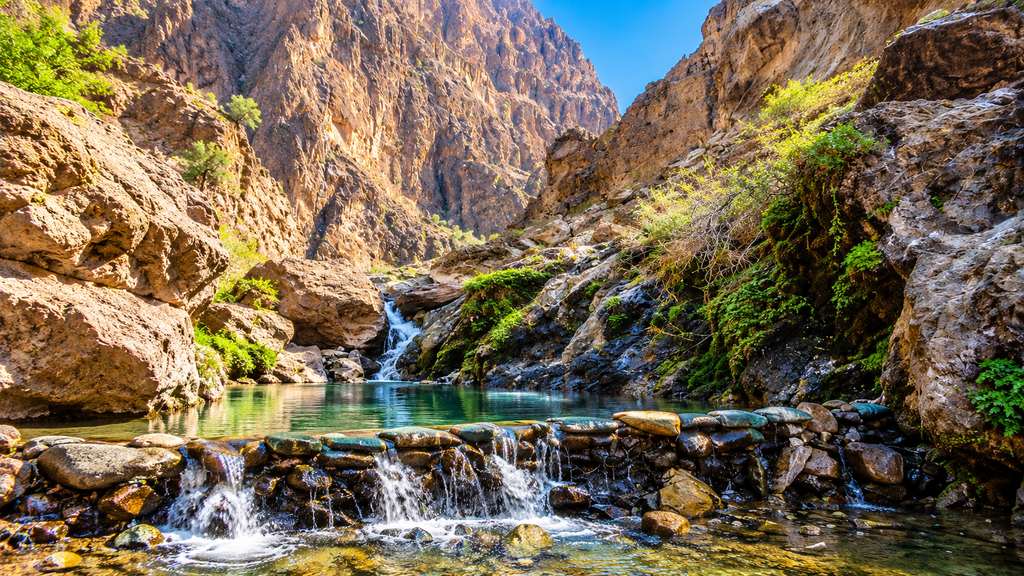
Oman has a habit of surprising you.
Ain Al Kasfa is another example.
The site is known for sulfuric hot water, and Oman’s official tourism information states that surface temperatures can reach around 45°C.
That temperature is important.
This isn’t simply a swimming pool.
Use caution.
Check conditions locally.
And don’t assume every part of the water is suitable for bathing.
The interesting thing about Ain Al Kasfa is the geological contrast.
Oman can look completely dry and rocky, yet natural water emerges from beneath the landscape.
It is another reminder that there is far more beneath the surface of this country than you might expect.
Sharqiya Sands — Experience the Desert Without Rushing
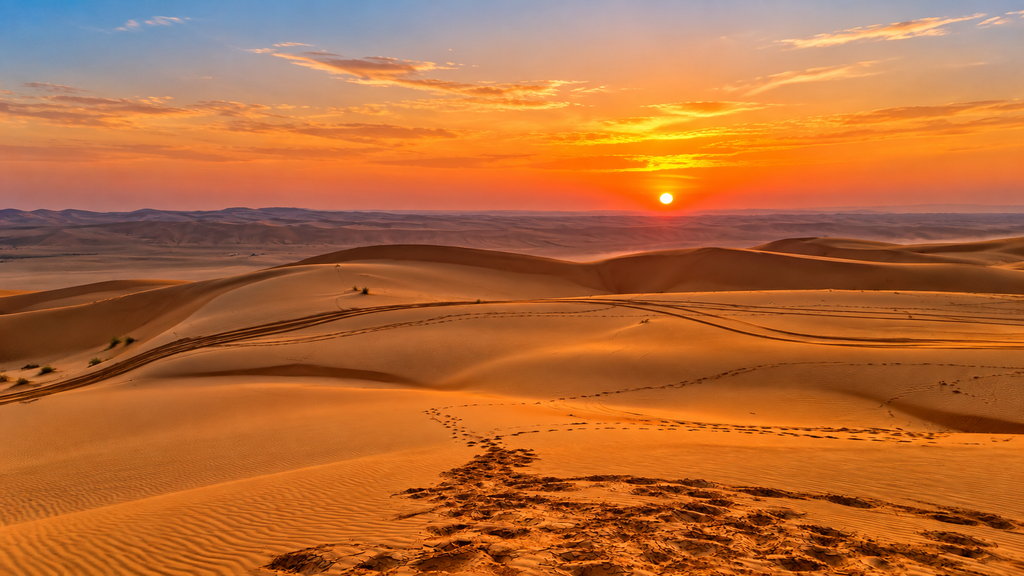
Sharqiya Sands isn’t hidden.
But there are ways to experience it that still feel deeply personal.
Instead of treating the desert as a two-hour activity between other destinations, stay long enough to see it change.
At midday, the dunes can feel enormous and intense.
Then the sun begins to drop.
The shadows stretch.
The sand turns warmer.
The temperature changes.
And suddenly the whole landscape feels quieter.
Oman’s tourism platform identifies Sharqiya Sands as one of the country’s major natural desert landscapes, known for its large golden dunes.
Don’t Drive Into the Desert Unprepared
This is one place where adventure and preparation have to go together.
Official Omani guidance recommends specialised guides for desert safaris and advises travellers undertaking off-road travel to use suitable 4WD vehicles, carry spare tyres and sufficient food, water and fuel, and avoid travelling alone.
If you don’t know how to drive on dunes, don’t learn by trial and error.
Use an experienced guide.
The desert will still be there when you are ready.
Dhofar’s Mountain Roads — The Green Side of Oman
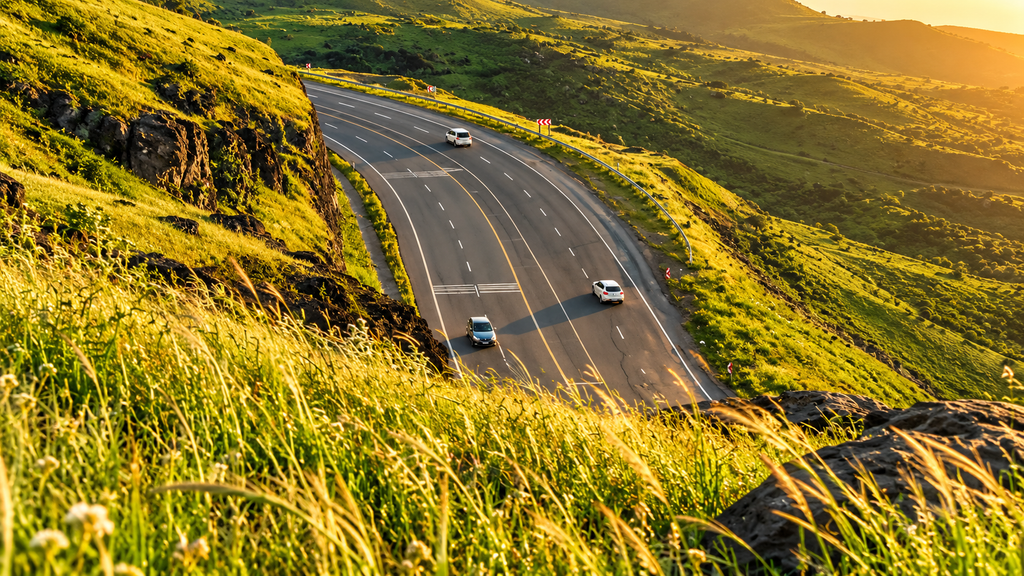
If someone showed you a photograph of Dhofar during Khareef without telling you where it was, you might not guess Oman.
Green hills.
Mist.
Clouds.
Moisture in the air.
A completely different atmosphere.
That is one of the reasons Dhofar deserves more than a quick visit to Salalah.
The official tourism platform describes Dhofar as a region of mountains, valleys and coastline and highlights destinations including Wadi Darbat and Al Mughsail.
During Khareef, the mountain roads themselves become part of the experience.
Pull over safely.
Look across the valleys.
Watch the clouds move through the hills.
And slow down.
Take Extra Care During Khareef
Beautiful weather doesn’t always mean easy driving.
Oman’s official guidance warns drivers about dense fog, animals crossing roads and wet conditions during Khareef and advises extra care when driving in mountain areas.
A little patience can make the difference between enjoying the landscape and dealing with an avoidable problem.
Ras Ar Ruways — Where the Desert Meets the Arabian Sea
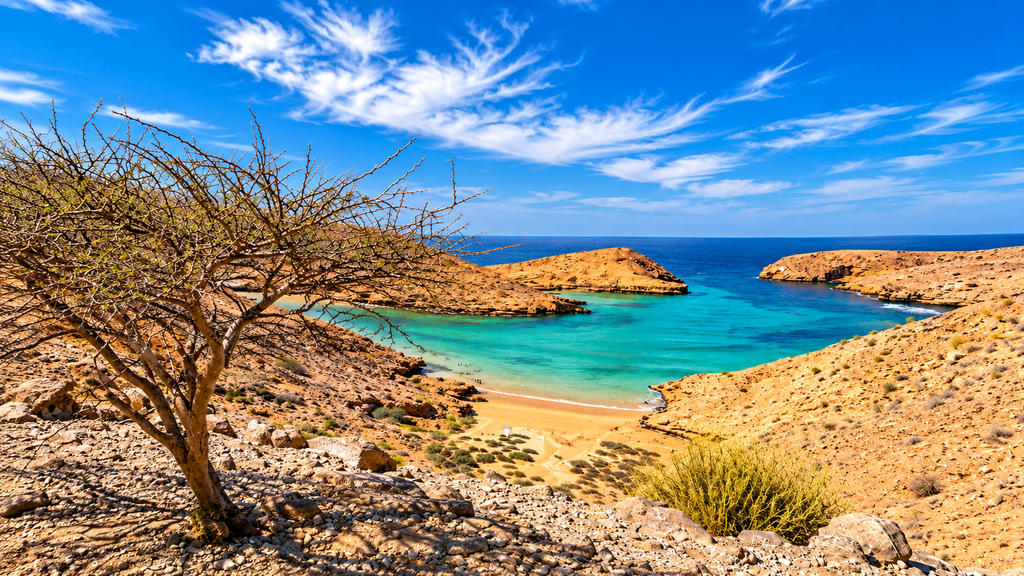
There is something fascinating about places where two completely different landscapes meet.
At Ras Ar Ruways, the desert reaches toward the sea.
Oman’s tourism information describes sand dunes cascading toward the Arabian Sea and identifies the area as the southern edge of Ramlat Sharquiyah.
It is the kind of landscape that makes a road trip worthwhile.
You can spend hours surrounded by dry desert scenery and then suddenly find yourself looking at the sea.
No complicated attraction is necessary.
Just the contrast.
Sand behind you.
Ocean ahead.
Sky everywhere.
Al Duqm Beach — A Quieter Coastal Stop
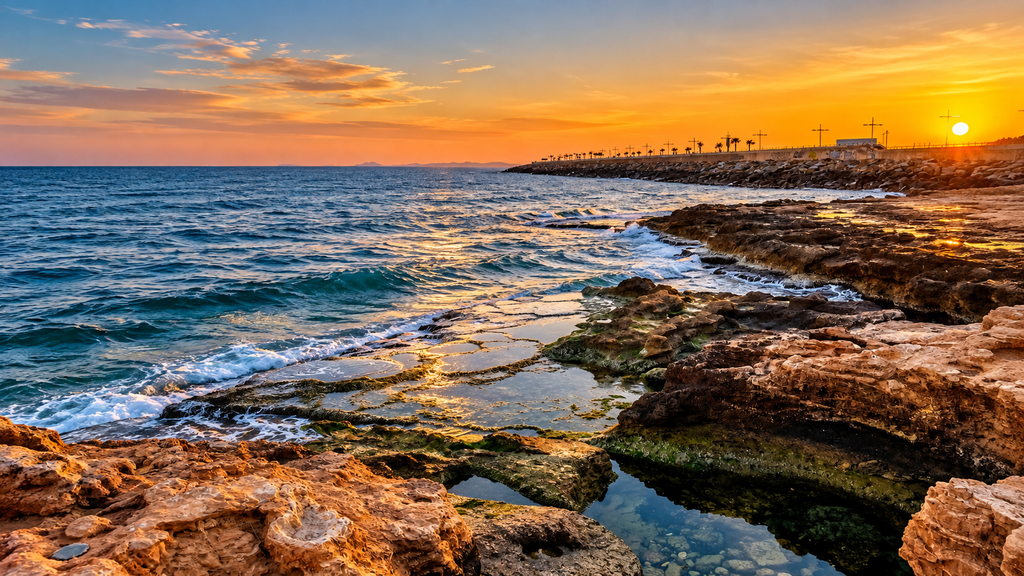
Al Duqm is often discussed because of its economic and industrial importance, but the wider area also offers an interesting coastal landscape.
The official tourism platform describes Al Duqm Beach as a peaceful coastline and notes that the surrounding marine environment can attract migratory birds and marine wildlife.
For travellers heading through Al Wusta, it can be a welcome change of pace.
The attraction is not necessarily a single landmark.
It’s the coastline.
The open sky.
The morning light.
The feeling of being far from the busy centre of Oman.
The Road Itself — Oman’s Most Underrated Hidden Gem
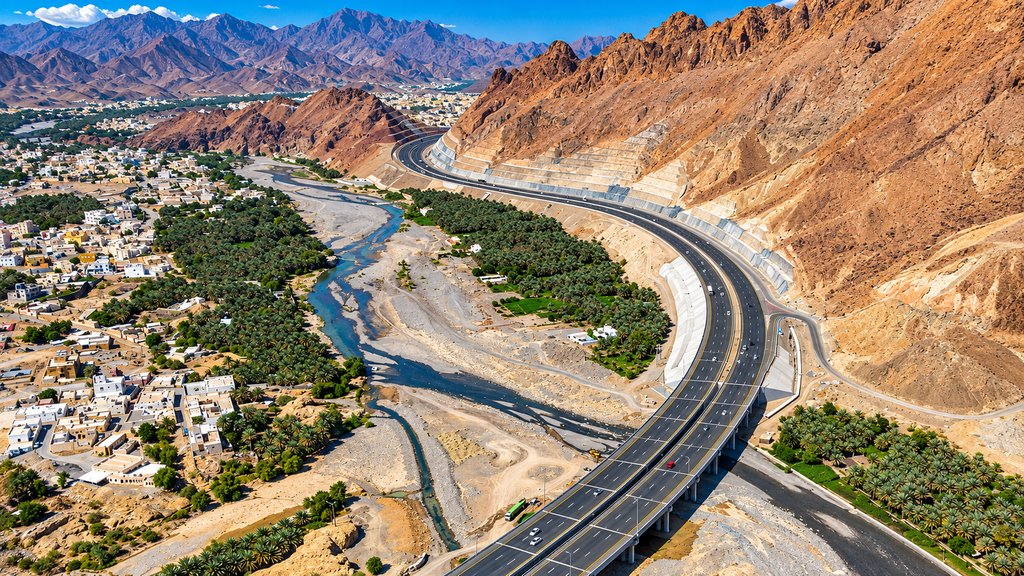
This might sound strange.
But hear me out.
Some of the strongest memories you take from a road trip aren’t connected to a famous attraction.
They are connected to a road.
A mountain appears unexpectedly.
The sea suddenly becomes visible.
A tiny roadside restaurant has the best tea you’ve had all day.
You stop because the sunset is too good to ignore.
A village appears around a bend.
You have no idea what is waiting another ten minutes down the road.
That uncertainty is part of the magic.
We have become very good at knowing what a place will look like before we arrive. We see the photographs, read the reviews and plan the route.
But travelling still feels different when you leave a little space for discovery.
And Oman rewards that.
A scenic Oman road-trip route connecting mountain villages, wadis and the eastern coastline.
Muscat → Wakan → Balad Sayt → Misfat → Wadi Tiwi → Wadi Shab → Al Ashkharah
A scenic Oman road trip connecting mountain villages, heritage settlements, wadis and the eastern coastline. Every location has its own Google Maps link.
Start the journey from Oman’s capital.
Open Muscat in Google Maps → 02 Wakan VillageMountain terraces, village paths and wide scenic views.
Open Wakan in Google Maps → 03 Balad SaytA remote mountain settlement surrounded by dramatic scenery.
Open Balad Sayt in Google Maps → 04 Misfat Al AbriyeenTraditional houses, palm gardens and historic falaj channels.
Open Misfat in Google Maps → 05 Wadi TiwiA dramatic valley road surrounded by palms and mountains.
Open Wadi Tiwi in Google Maps → 06 Wadi ShabA spectacular valley known for hiking, pools and limestone scenery.
Open Wadi Shab in Google Maps → 07 Al AshkharahFinish on the eastern coast with open beaches and sea views.
Open Al Ashkharah in Google Maps →How to Plan a Hidden-Gems Road Trip in Oman
The biggest mistake would be trying to see every place in this article.
Don’t.
Oman is too large for that kind of rushed travel.
Choose a region.
Build a route around it.
Then leave some empty space.
For example, a mountain-focused journey could connect Wakan, Balad Sayt and Misfat Al Abriyeen.
A coastal journey could include Wadi Shab, Wadi Tiwi, Sur and Al Ashkharah.
A more ambitious trip could continue toward Masirah Island and the Al Wusta coastline.
Official Oman itineraries also connect destinations such as Misfat Al Abriyeen, Wadi Shab, Sur and Sharqiya Sands into multi-day journeys.
The important thing is to avoid spending your entire holiday watching the clock.
If Google Maps says a journey takes three hours, don’t automatically assume you should arrive three hours later.
You might stop.
You might photograph something.
You might have lunch.
You might find a viewpoint.
That’s why road trips need breathing room.
Best Time to Explore the Hidden Gems in Oman
There isn’t one perfect season for every destination.
The cooler months are generally more comfortable for long drives, hiking, mountain exploration and desert trips.
Wadi Shab’s official tourism page currently lists September through May as its recommended visiting period.
But conditions can change.
Rain can affect wadis.
Fog can reduce visibility in mountains.
Heat can make long hikes difficult.
Dhofar is different again because Khareef transforms the landscape.
The important thing is to check conditions for the specific place you’re visiting rather than assuming the entire country has identical weather.
Nature doesn’t follow your itinerary.
What to Pack for an Oman Road Trip
You don’t need to carry everything you own.
But you should be prepared.
Essential Things to Carry
- Drinking water
- Food and snacks
- Sunscreen
- Sunglasses
- Hat
- Comfortable walking shoes
- Power bank
- Phone charger
- Offline navigation
- Basic first-aid supplies
- Swimming clothes for suitable wadis
- Extra clothing
- Flashlight
- Camera or phone with enough storage
For remote destinations, carry more water and food than you think you’ll need.
And if you’re travelling off-road, your preparation needs to increase.
Oman’s official guidance recommends spare tyres, adequate food, water and fuel for off-road travel, as well as avoiding travelling alone.
It sounds obvious.
But the middle of nowhere is not where you want to discover that you should have prepared better.
Do You Need a 4WD in Oman?
Not everywhere.
For many normal roads and tourist destinations, a regular car is enough.
But some mountain and desert routes are different.
Balad Sayt is officially described as requiring four-wheel drive and mountain-driving familiarity.
Off-road desert travel also requires the right vehicle and knowledge.
If you’re inexperienced, use a professional guide.
Don’t assume a track is safe because you saw someone else drive it online.
And never let a photograph convince you to ignore road conditions.
The best adventure is one you return from safely.
Respect the Places You Came to Discover
This might be the most important part of the entire article.
A hidden village is not empty just because you don’t see many tourists.
A farm is somebody’s livelihood.
A falaj is not a swimming pool.
A quiet beach may be part of an important ecosystem.
And a mountain road may pass directly through someone’s community.
Travel with respect.
Ask before photographing people.
Don’t enter private property.
Don’t pick fruit.
Don’t leave rubbish.
Don’t pollute water.
Don’t make unnecessary noise in residential areas.
Oman’s official visitor guidance specifically asks travellers to respect local customs, dress modestly, avoid loud noise in neighbourhoods, ask permission before photographing people and protect natural areas.
The principle is simple:
Leave the place as beautiful as—or better than—you found it.
How Much Does a Hidden-Gems Trip in Oman Cost?
There isn’t one fixed budget.
Your spending will depend heavily on how you travel.
The main costs are usually:
- Car rental
- Fuel
- Accommodation
- Food
- Guided activities
- Boat trips
- Desert experiences
- Optional tours
You can build a comfortable trip with hotels and organised experiences, or keep things simpler with modest accommodation and careful planning.
But here’s something I love about this kind of travel:
Some of the best moments are free.
A mountain sunset doesn’t cost anything.
Neither does walking through a village.
A quiet beach is free.
So is pulling over on a safe roadside viewpoint and watching the sky change colour.
You don’t always need an expensive attraction to have an expensive memory.
A Practical 7-Day Hidden Oman Road Trip
If you have one week, don’t try to fit all 15 destinations into your itinerary.
Instead, create a route that makes geographical sense.
Day 1 — Muscat to Wakan
Leave Muscat and head toward Wakan.
Spend time exploring the mountain village and its agricultural landscape.
Don’t overload the day.
Enjoy the drive.
Day 2 — Balad Sayt
Make Balad Sayt the focus.
Use an appropriate 4WD and allow plenty of time for the mountain roads.
Take photographs and explore the village respectfully.
Day 3 — Misfat Al Abriyeen
Continue toward Misfat.
Walk through the old village.
Explore the terraces.
Observe the falaj system.
If possible, stay overnight.
Day 4 — Toward the Coast
Begin the journey toward the eastern coastline.
Depending on your route, you can stop at mountain viewpoints or Wadi Tiwi.
Don’t turn the drive into a race.
Day 5 — Wadi Shab and Wadi Tiwi
Start early.
Give Wadi Shab enough time.
Bring water, suitable footwear and swimming gear.
Afterwards, explore Wadi Tiwi if conditions and time allow.
Day 6 — Al Ashkharah
Continue along the coast.
Slow down.
Enjoy the beach.
Watch the sunset.
This is the day when you should deliberately leave part of the schedule empty.
Day 7 — Return
Start the journey back toward Muscat.
Leave plenty of time.
If you’re travelling farther south, extend the trip rather than trying to cover huge distances in a single day.
What Makes Oman Different?
Maybe it’s the mountains.
Maybe it’s the desert.
Maybe it’s the sea.
Maybe it’s the villages.
For me, it’s the combination.
You can begin a day near the coast, drive into the mountains, find green terraces around an old village and later watch the sunset across desert dunes.
The scenery keeps changing.
But there is something else connecting all of it.
Water.
Agriculture.
Roads.
Communities.
Traditions.
The old falaj systems.
Fishing villages.
Mountain settlements.
Desert camps.
These aren’t separate pieces.
Together, they tell the story of Oman.
And that’s why I think the best way to explore the country is to slow down enough to notice the connections.
Frequently Asked Questions About Hidden Gems in Oman
What are the best hidden gems in Oman?
Wakan Village, Balad Sayt, Misfat Al Abriyeen, Wadi Tiwi, Al Ashkharah, Masirah Island, Bar Al Hikman and quieter parts of Dhofar are excellent options for travellers who want to go beyond Oman’s most famous attractions.
Can I explore hidden places in Oman by car?
Yes. Driving gives you access to many mountain, coastal and rural destinations. However, certain mountain and off-road routes require a suitable 4WD and appropriate driving experience.
Is Wakan Village worth visiting?
Wakan is particularly interesting for travellers who enjoy mountain scenery, traditional villages, agriculture and hiking. The village is located at around 2,000 metres above sea level.
Do I need a 4WD for Balad Sayt?
Yes. Oman’s official tourism information states that visiting Balad Sayt requires a four-wheel-drive vehicle and familiarity with mountainous driving.
Is Misfat Al Abriyeen worth staying overnight?
Yes, especially if you want to experience the village at a slower pace. Locally owned guesthouses are part of the experience and allow visitors more time to explore the traditional village environment.
Is Wadi Shab suitable for everyone?
Wadi Shab involves walking and swimming, so visitors should be comfortable with both. The official tourism guidance recommends suitable footwear, plenty of water and swimming ability for the cave section.
What should I take to remote areas of Oman?
Carry enough water, food and fuel, along with navigation tools, appropriate clothing and emergency supplies. For off-road travel, official guidance recommends a suitable 4WD, spare tyres and avoiding solo travel.
What should I do if it rains?
Be extremely careful around wadis and mountain roads. Flash flooding can occur, and conditions can change quickly. Do not enter a wadi simply because the weather looks fine where you are standing.
When is the best time for an Oman road trip?
The cooler months are generally more comfortable for outdoor travel. Wadi Shab’s official tourism guidance lists September through May as its recommended period. Dhofar has a different seasonal appeal during Khareef.
Final Thoughts — Sometimes You Just Need to Take the Road
The first time you start looking beyond Oman’s famous places, something changes.
You stop asking, Where is everybody going?
You start asking, Where does that road go?
A mountain catches your attention.
A small village appears in the distance.
The coastline opens up.
The light changes.
You see a road disappearing around a bend and suddenly the plan you made that morning doesn’t seem quite as important.
That’s the beauty of exploring hidden gems in Oman.
They don’t have to be completely secret.
They don’t have to be untouched.
They don’t even have to be the most spectacular places you’ve ever seen.
They just have to make you stop.
Look around.
Breathe.
And remember why you wanted to travel.
Oman gives you plenty of opportunities to do exactly that.
Drive into the mountains.
Walk through an old village.
Follow the coast.
Watch the desert change colour.
Sit beside the sea.
Talk to people respectfully.
Take photographs, but don’t let the camera become the whole experience.
And leave some space in your itinerary for something you didn’t plan.
Because sometimes the place you remember for years isn’t the destination you spent weeks researching.
It’s the place you found because you decided to take the road.
And maybe that’s the real hidden gem in Oman.
The freedom to keep going.